

Abstract
Is there any hope? Can the EU get its act together and does it have any influence? Will the countries in the Arab League advocate more decisively for a two-state solution, as they have done in the past? Will the Muslim countries and the EU countries be able to make the case of a two-state solution? Or will the extremists in the Israeli government succeed in forcing all Palestinians out of Palestine, to annex all Palestinian territories? And will the supporters of the a two-state solution be able to convince the new Trump administration? Will the general back slide of international law and multilateral-ism prevent us from working for solutions?
Introduction
Was it too early or too late? That was the question we posed to ourselves when the Swedish Government recognized Palestine 11 years ago. Since then, the number of countries that recognize Palestine has grown from 135 to almost 150. Four other European countries — Norway, Ireland, Slovenia, and Spain — joined them in May 2024. Mexico affirmed recognition of Palestine in February 2025, and 11 other countries (among them France, the UK, Canada, and Australia) announced their intention to do so at the UN General Assembly (UNGA) in New York in September.
A majority of UN member states want to see speedy implementation of the two-state solution (as shown in a vote in the UN General Assembly in September 2024).
The horrible Hamas attack and the devastating war in Gaza have underscored the importance of resolving this conflict, immediately turning statements into action – to stop the killings and to inject hope for a peaceful future in Palestine, in Israel, and in the entire region.
First and foremost, we must all show compassion, our abhorrence of violence and of the killing of innocent civilians, children in particular, wherever it takes place. We must condemn terrorism, antisemitism, and Islamophobia.
We also realize that the previous years’ horrifying events have a background in the dramatic and difficult history of suffering and death on both sides.
We should understand the difference between the extreme right-wing government of Israel and the Israeli people, and recognize that Hamas and the Palestinian people are not the same thing.
We ought to consider how the disproportionate difference in the number of killed humans reflects Israel’s superiority militarily, economically, and politically, and acknowledge that the support from powerful parties such as the United States makes the realization of peaceful solutions difficult.
The human suffering in Gaza is beyond comprehension: tens of thousands killed, mostly women and children. Tens of thousands are missing, buried, under the ruins. Malnutrition and starvation increase. The physical and mental destruction, as well as the devastation of the natural environment, are enormous. Generations will be needed to return Gaza to its former situation, if at all possible.
We Must Try to Think Ahead
We must try to think ahead, to think long term: How will it be possible for those now growing up in the ruins caused by this war to live with and relate to each other? How will the young generations be able to deal with the emotions of hatred and revenge?
Peace cannot be achieved by understanding only one of the sides, no matter how strong emotions may guide our actions and positions. The Israeli historian and author Yuval Noah Harari has said: “Living in the idle east forces you to become aware of the dark sides of humans and history, and that everything can collapse at any moment. You are forced to see the grey zones, that nothing is black or white. That humans can be victims and perpetrators at the same time. Oppressors and oppressed.”
It is probably more difficult than ever for Palestinians and Israelis to foresee a future when the two states live side by side. For both sides “the other” has become less reliable than in a long time. At the same time, two states alongside each other is the best way to establish peace and well being for both peoples.
Could this nightmare have been avoided had the world community taken the implementation of the two-state solution seriously, meaning the end of the
occupation and recognition of the Palestinian state alongside the State of Israel?
Looking back at the Swedish decision to recognize Palestine in 2014, we may say: Of course, we had wanted other countries in Europe to follow
and to do the same – built on the principle of peaceful coexistence between Israel and Palestine. I will return to that later.
Reasons Sweden Recognized a Palestinian State
We recognized the Palestinian state because:
We wanted to complement our good relations with Israel at that time; we wanted to contribute to peace in the region; we wanted to support moderate forces in Palestine; we wanted to make the parties to the conflict more equal, living side by side separated in accordance with the 1967 borders and with Jerusalem as their shared capital; we wanted to contribute to peace between the two peoples, for the good of Israel as well.
Lastly, but maybe most importantly, we wanted to inject hope and belief in the future among young Israelis and Palestinians, to avoid their radicalization in light of the lack of alternatives to violence, and a status quo which was actually deteriorating because of the ongoing settlement expansion supported by the Israeli army, and because of increased violence.
From a legal viewpoint, our recognition was built on several UN Security Council resolutions; it was in accordance with international law – a territory, a people, and a government capable of controlling the territory – and the occupation of land should not constitute an obstacle because as the internationally sanctioned principle says: “No right arises from wrongdoing.” Ergo, occupation being illegal it cannot be used as an argument against recognition.
And remember, recognition of a state – or diplomatic relations – is not a reward. It is to confirm the existence of a state – that it is part of the international community. It provides channels for contacts and for criticism, and emphasizes the responsibility of the state.
Let me repeat the obvious. The Palestinian Authority and the Palestinian people are not Hamas. Similarly obvious is that we, Sweden, never financed Hamas. Our recognition was reflecting what the EU member states had agreed upon in 2009 (under former Swedish Prime Minister Carl Bildt’s leadership) – namely, that they will recognize the State of Palestine when appropriate.
At the time, in 2014, we were not joined by any other EU country; however, members of the Warsaw Pact kept their recognition of Palestine when they became independent and later joined the EU. Also, Iceland had recognized Palestine already in 2011.
Unfairly Labled Antisemitic
Israel made a strong effort to prevent other countries from joining us and to do what they could to stop the establishment of a Palestinian state/ two-state solution. The Netanyahu government threatened EU countries with reducing trade and other economic ties. Israeli representatives called EU ministers on the phone, directly into EU foreign ministers’ meetings, to warn/threaten the ministers.
The ministers were told that if they recognized Palestine, they would be labeled antisemitic. This was and is (for all of us) an unacceptable accusation. European governments in general work against antisemitism, and no European foreign minister wants to be labeled antisemitic. But the Israeli Government repeatedly and publicly called the foreign minister of Sweden an antisemite. It was a horrible and insulting experience. Perhaps the worst accusation imaginable, and for me personally, and for my family a terrible experience. The Israeli propaganda did this to scare other countries off from similar recognition.
Our recognition of the State of Palestine was well received in most countries in the world, also by those who didn’t have any plans to take the step immediately. Among Palestinians, our recognition was obviously lauded. Even if many of them were pessimistic about concrete change on the ground, our political step was looked upon as brave and principled – with self-determination and human rights at the center. During the years after the recognition, we participated in multiple initiatives by other EU countries and by Sweden, intended to advance a peaceful solution.
The Importance of UNRWA
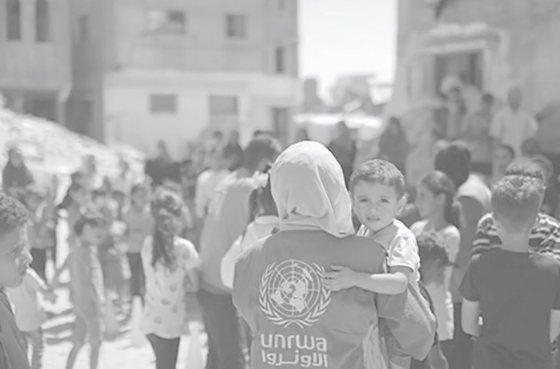
UNRWA, the UN Relief and Work Agency, was already under attack then from Israeli actors who wanted to undermine both its assistance to Palestinians, displaced and refugees, as well as the political mandate of UNRWA, since it is underpinning the refugee status and consequently the right of return of Palestinians to where they originally lived. The mandate of UNRWA reminds the Israeli Government that Israel is still occupying Palestinian territories.
Together with the Government of Jordan, we initiated a long-standing campaign to support UNRWA, to make it more efficient and transparent, to fund it well. Many donor countries around the world joined us in this work and managed both to make reform happen and to secure funding. It should be noted that UNRWA’s work in the Occupied Palestinian Territory was conducted with full oversight by the Israeli authorities.
The organization is not, and was not, perfect, but there is no reason to claim that it is supporting Hamas or is infiltrated by Hamas, as shown by a recent study led by French minister Catherine Colonna, with the involvement of the Swedish Raoul Wallenberg Institute https://www.unrwa.org/newsroom/official-statements/independent-review-unrwa-adherence- humanitarian-principle-neutrality. The study was initiated after Israel made these accusations. It seems they were mere propaganda aimed at undermining necessary institutions, healthcare, education and shelter – and to portray the UN as biased. This was later followed by attacks on UNIFIL, its peace-keeping mission in Lebanon.
Can Hamas Follow the Path of the PLO?
We were all shocked by the level of cruelty in the abhorrent attack on Israel by Hamas and others on the October 7. This action can never be defended. But to achieve a peaceful solution it is important to analyze why it happened. Oppression and lack of hope for the future breed radicalization, especially if there is no option for elections and a full-fledged democracy in an independent state, free from occupation. By establishing a state, with its institutions, accountability, elections and democracy, and an independent economy, legitimacy will grow from those instruments and not from the participation in violent resistance against the occupation.
This raises the question whether armed resistance groups are able to transform into politically trustworthy political parties and state-builders. PLO, the Palestinian Liberation Organization, made this journey, with Swedish support. First Prime Minister Olof Palme and later Minister for Foreign Affairs Sten Andersson played an important role in moving the PLO under the leadership of Yassir Arafat to abandon violence and armed resistance and to recognize the right of Israel to exist. This initiative was backed by many Europeans, as well as many Arab countries. The Swedish goal was achieved, given that the American government considered it useful and relevant to enter a dialogue with the PLO – something that later caused Israel to understand that the Americans and the world expected Palestinians and Israelis to find a peaceful solution. When the Social-Democrats lost the Swedish elections in 1991, Sten Andersson passed the baton to Norway. This led to the Oslo Accords that have oriented the relationship between Israelis and Palestinians for several decades, but has failed to create equality between the partners.
The PLO’s transition to a political organization demonstrates the complicated dilemma in handling Hamas. On the one hand, it may be possible to get this organization to lay down its arms. On the other, Hamas demonstrated massive brutality in the acts it committed on October 7. Support for Hamas in Gaza and the West Bank may be explained by the 30 years of failure to secure Palestinian human rights and the right to self-determination. Yet could better contacts with Hamas, similarly to the contacts with the PLO in the late 1980s, have prevented October 7? Today, most actors, Palestinians, regional and other see very little room for Hamas in any role, neither as a movement or a political party.
The most important thing at present is that the war in Gaza must end, and the ceasefire in Lebanon must be stabilized. The call for a ceasefire in Gaza must be heard and abided by. The Israeli hostages must be released,as must the Palestinian prisoners. We have waited far too long. It is unacceptable that despite most of the world expecting an end of the war and advocating for peace, it still goes on. There is a surge of violence in the West Bank and in East Jerusalem, especially caused by settlers. The language of annexation of the occupied territories and the expulsion of Palestinians is voiced by leading members of the Israeli Government. There is a risk of further expansion of the conflict in the Middle East region with far-reaching global effects.
International law, international humanitarian law is being undermined, causing possible detrimental effects also in other parts of the world. When human rights and humanitarian law are undermined, the international consequences may be serious.
Are There Grounds for Hope?
Is there any hope? Can the EU get its act together, and does it have any influence? Will the countries in the Arab League advocate more decisively for a two-state solution, as they have in the past? Will the Muslim countries and the EU countries be able to make the case for a two-state solution?
Or will the extremists in the Israeli Government succeed in forcing all Palestinians out of Palestine and annexing all the Palestinian territories? And will the supporters of the two-state solution be able to convince the new Trump administration? Will the general backslide of international law and multilateralism prevent constructive solutions?
There are many questions, obstacles, and risks. There are also signs and steps that can make us more hopeful, those of us who believe in peace through a two-state solution.
The war in Gaza has made the Arab world more active than for a long time before. Leading Arab countries agree on the two-state solution and the dialogue between Saudi Arabia and Iran is significant, not the least for preventing the spread of violence in the region. The condition set by Saudi Arabia for recognizing Israel — that a Palestinian state be established — could influence the decisions of the United States.
The Global Alliance for the Implementation of a Two-State Solution
The two-state solution is back on the international agenda. States around the world make the case that Israel and Palestine have to find a way to coexist, side by side. There is an urgent need for leadership and active engagement. Norway, Ireland, Spain, Slovenia and some other countries have recognized Palestine. They broke inertia, and I hope that other Europeans will follow soon, as may France, Australia, Canada, Finland and others.
Over 90 countries have come together as the Global Alliance for the Implementation of the Two State Solution. These include all EU countries, even those who have not yet recognized Palestine, all Muslim countries, and others from various continents. If all these countries, especially the most powerful ones, express their support for a Palestinian state and are willing to exert pressure on Israel to recognize it and to agree to a ceasefire, that will make a difference.
A large majority of countries in the world defend international law, humanitarian law and its institutions, such as International Court of Justice and the International Criminal Court, against those who do not comply.
Last but not at all least: In Palestine there is a vibrant civil society, with many Palestinians able and willing to build the state and to move away from the Oslo agreement’s restrictions into full statehood. I see youth organizations, women’s organizations, academics, experts, former and still active politicians starting to prepare for an independent state, for its own updated legislation, independent security arrangements, institutions and systems, and to work for elections as soon as possible. And, of course, to strive for a common national framework for Gaza, the West Bank, and East Jerusalem.
I have thus demonstrated that Sweden’s recognition of Palestine was not at all too early. Now we and all good powers must make sure that it was not too late.
The text is partly based on Margot Wallström’s speech in the Swedish Parliament – Riksdagen – on November 27, 2024, on the occasion of the 10th anniversary of the recognition of the State of Palestine by Sweden, under her term as Sweden’s Minister of Foreign Affairs and partly on an article co-authored with Annika Söder. The Swedish components were translated by PIJ