

Since the events of October 7, and the subsequent military escalation in Gaza, the West Bank, and other fronts, both Palestinian and Jewish societies have endured one of the most violent and traumatic periods in the history of the conflict. One might have expected that the severity of the crisis, alongside the enormous toll borne by both peoples, would strengthen the search for a political alternative and reinforce the legitimacy of peace activists1 offering one.
Yet the current reality has proven far more complex. It has intensified feelings of loss, fear, distrust, and even hatred and desire for revenge, presenting peace activists with unprecedented challenges. Since October 2023, Palestinian and Israeli peace organizations have confronted myriad dilemmas as they adapted and increased their activities to meet some of the most challenging moments in both peoples’ histories.
Building Peace Amid Deep Trauma and Asymmetry
Their operating environment in both societies is full of pain and profound trauma, personal as well as collective. Trauma erodes the ability to empathize and to build trust with the other side, and even the very idea of a “peace dialogue” can trigger emotional pain and damage. Within this reality, any attempt to initiate such processes faces a fundamental difficulty: how can one speak of reconciliation when the wounds are so fresh and so deep?
At the same time, the relationship between Israelis and Palestinians is fundamentally asymmetrical, as it has always been. The starting point for joint activity is inherently unequal: the system of occupation, alongside vast disparities in political, economic, and military power, creates structural imbalances that make partnerships particularly complex. Even within Israel, significant power gaps exist between Jewish and Palestinian citizens.
These dynamics have been altered and sharpened since October 2023. Israeli society suffered a level of violence not seen in many years, paying a devastating price on October 7, the single worst day in Israeli history. At the same time, the escalating Israeli use of force in Gaza and the West Bank presents the worst tragedy in the history of the Palestinian people, which is still ongoing. Together, trauma and asymmetry profoundly shape - and limit - the discourse and cooperation between Palestinian and Israeli societies. Peace organizations are therefore required to respond with sensitivity at both the conceptual and practical levels, in every group process they operate.
The Dilemma of Legitimacy
The raison d’être of peace organizations is to create social and political change. To be effective, activists must be seen as legitimate members of their communities, not as hostile elements - or worse, traitors - accused of siding with the enemy in wartime.
Years of severe violence and polarized public discourse have drastically narrowed the boundaries of what is considered legitimate. This affects every aspect of peace organizations’ action strategies and ethics: Is now the right time to speak of long-term goals like peace? Is it permissible to acknowledge the suffering of the other side? Many view such questions as attempts to silence difficult truths, while others see them as premature or even dangerous.
This dilemma exists for both Jewish Israelis and Palestinians, in Israel and in the occupied territories alike. And it carries personal consequences for activists, organizational implications, and direct effects on Israeli Palestinian partnerships.
As with the previously discussed problem of asymmetry, this is not a new dilemma for our field. But the last two years have raised the stakes associated with taking action, with physical violence, state and social coercion, and intimidation all now more likely. A further dilemma is that the peace building field also knows that the stakes associated with inaction – of allowing the current dynamic to continue and accelerate – are now genuinely existential.
Diverse Strategies of Coping and Action
There is no single “correct” response to this situation. Organizations adopt different approaches depending on their values, constituencies, and reading of the political and emotional climate. Some act openly and publicly; others choose discreet “under the radar” work in closed groups.
Foundational concepts in peace building - such as inclusive listening and the narrative approach (recognizing that each side has its own story of victimhood and responsibility) - remain central for many. Yet these face two major challenges:
- Sustaining inclusive dialogue in traumatic conditions: Constant trauma makes it extremely difficult to transcend the dynamics of victimhood and blame. Can enough people today, amid such pain, engage with the narrative of the other, confront their own side’s responsibility, and focus on building a different future? Does the level of trauma and asymmetry still allow for a shared discourse - a single joint voice for peace?
- Organizational constraints: Since October 2023, face-to-face meetings have plummeted. Permits for Palestinians to enter Israel, or for Israelis to enter Palestinian areas, have largely been revoked. Many meetings moved online - via Zoom or WhatsApp - especially difficult for groups meeting for the first time. Some organizations managed to convene in Area C; others, on a small scale, only abroad.
Despite these obstacles, organizations have upheld core principles: that joint peace work must begin with recognizing the humanity of the other and affirming equality - at both interpersonal and collective levels. From there, organizations pursue diverse strategies in different fields of action:
● Educational programs: Formal and informal, fostering dialogue through shared values, personal encounters, and even inter-religious teachings that encourage equality and hope.
● Activities around common interests: Like the environment, employment, and sports - where cooperation can develop in “softer” spaces, alongside thoughtful facilitation, all aimed at the mutual need to break cycles of bereavement and violence.
● Public advocacy: On the costs of conflict, the existence of partners on the other side, and the benefits of nonviolence.
● Protest action: To expose injustices and bring them into public debate.
● Solidarity work: Joint demonstrations and protective presence against violence.
● Policy engagement: Whether with local governments or international actors, sometimes even through the legal systems.
● International action: Born from an awareness that meaningful diplomatic intervention is both necessary, and – for the first time in decades – possible. And that Israeli and Palestinian peace builders can be effective agents to catalyze it.
Some organizations emphasize immediate goals; others maintain long-term horizons. Many increasingly blend the two. Without immediate intervention and a change in direction, there is arguably no long-term horizon possible. Yet without a longer-term theory of change to transform relations between both populations, a future based upon equality and mutual dignity is hard to envision.
What Has Happened in Peace building Since October 7
In the first days of the nightmare that unfolded on October 7, some peace organizations suspended activity. The shock, grief, and direct harm to activists and their families and communities, the intra-community clustering, made “business as usual” impossible.
Yet many quickly launched internal dialogues - processing the pain, supporting one another, and asking: What now? With whom should we work? Should efforts shift to uni-national work, or should bi-national partnerships be preserved? Organizations with experience and “tools” for dealing with crises, had a big advantage. ALLMEP ran Arabic and Hebrew Trauma awareness training sessions, as did a few organizations independently, all actors realized that trauma is the new reality that we will be constructing our peace building efforts from now on. The discussions that we at ALLMEP convened in those early days and weeks, on all members’ calls and on direct 1/1 discussions, were among the most difficult – and important – in our history.
Another challenge was communicating these dilemmas to funders. Encouragingly, many donors demonstrated flexibility and even increased support, recognizing the urgent need. Only a few organizations ceased activity entirely; most resumed quickly, and in a survey ALLMEP conducted about three months after the outbreak of the war, we discovered that most of our members even increased their activities - with the necessary adjustments and changes.
Key Dilemmas in Choosing Action
For Israeli organizations, the main dilemma was whether to join the anti-war protest movement - and if so, in what ways. These protests focused primarily on freeing hostages, a call for a cease-fire, on ending what was seen, over time, as an increasingly illegitimate and political war, and highlighting the costs borne by Israeli society. Many peace building and human right organizations, realizing the important impact of a large anti-war protest movement, asked themselves should peace organizations join these protests, even if doing so meant moderating their messages to avoid alienating others in the movement? The dilemma was sharper for groups including Palestinian citizens of Israel, who feared that raising their voices could backfire - which it often did - this community was silenced and threatened in demonstrations, in workplaces, universities etc.
For Palestinian peace organizations, the challenge was existential. How can one continue to call for peace with Israel when one’s community is experiencing extinction, displacement, and daily settler violence? For many, urgent humanitarian and protective work took priority over dialogue. Bi-national programs with Israeli groups often receded into the background, though they did not disappear entirely and some adapted and recovered surprisingly quickly.
Yet, activists drew strength from one another. Israeli partners offered solidarity and protection against settler violence, and have been engaged in constant and widespread protest activity on the streets of Israel for two years; Palestinian partners reminded Israelis that even in times of severe oppression, they had not abandoned the path of non-violence and peace. The shared conviction remained: the alternative to action is worse. Slowly, joint activities resumed - summer youth programs, adult dialogues abroad or in Area C as did diverse anti-war activities - demonstrations around the country - from the Gaza border to Arab towns and villages and the main Israeli cities. New endeavors, like the “It’s Time” coalition, uniting over 60 organizations in Israel or the “Peace Partnership” coalition and “Mothers against violence” - women’s network coalition. Organizing major events, and sustaining momentum despite the difficulties - you can see on ALLMEP’s public activities calendar, the extent of members and partners’ public activities in the last 2 years.
Growing Pressures and Harsh Realities
As the war dragged on, even finding agreement on how to talk about the situation could present challenges. Many perceived the unfolding reality as war crimes, ethnic cleansing, or even genocide. Feelings of helplessness deepened, and organizations in Israel, with some new initiatives, mostly led by women, increasingly highlighted humanitarian suffering in Gaza - posting and carrying images of victims at protest demonstrations, speaking of starvation - despite opposition from some protest groups. The protest movement in Israel grew, engaging also Palestinian citizens of Israel in their towns, villages and mixed cities like Haifa and Jaffa, with upwards of 500,000 people thought to have joined the largest protest against the war to-date in late August.
Going Up in the Bottom-Up Paradigm
Grassroots organizations, once focused mainly on people-to people community work, increasingly recognized the need to integrate a political dimension relating to the conflict into their activities. Long-term peace building cannot be dismissed, even in a state of emergency. Without political vision, there is no hope — and activists felt compelled to articulate one themselves, with a roadmap of actions.
This has expanded the scope of civil society work: advocacy toward decision-makers, particularly at the international level, has gained legitimacy. Civil society actors are now more present in political spaces, contributing field knowledge to policy discussions.
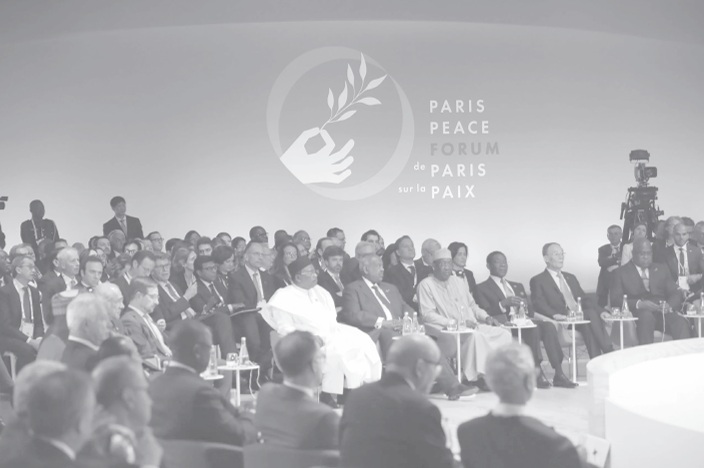
At the June 2025 Paris conference, hosted by the French president and attended by hundreds of Israeli and Palestinian peace activists, organizations led by ALLMEP produced concrete recommendations for international policymakers - even under the shadow of new regional wars that took place at the time. A follow-up conference in July in New York reinforced recognition of civil society’s unique role and expertise, and integrated dozens of the ideas generated in Paris into the New York Declaration.
A Shared Peacebuilding Ecosystem for Change
The Alliance for Middle East Peace (ALLMEP)2 is an ecosystem of Palestinian and Israeli peace builders: diverse organizations, varied strategies, different voices - yet interconnected. By strengthening one another, they extend their reach within both societies while also presenting a stronger joint voice to decision-makers regionally and globally.
The Palestinian and Jewish public are exhausted. The price of failing to find a solution is unbearable. The responsibility of peace organizations is to chart paths forward, mobilize broad support, and together construct hope.
__________________________________________________________________________________________
1 A broad definition that includes peace activists, shared society activists within Israel, human rights organizations, etc.
2 The Alliance for Middle East Peace (ALLMEP) leads a growing network of over 180 civil society organizations, with hundreds of thousands of Palestinians and Israelis living and working in the region. Our work advances cooperation, trust, justice, equality, mutual understanding, and peace within and between these communities. https://www.allmep.org