

Introduction
The purpose of carrying out this discussion at this point in time is to halt the attacks on Gaza. Without a political horizon for the post-war scenario, Israel continues to run rampant in the State of Palestine (i.e., the West Bank, Gaza and East Jerusalem); the testimonies coming from there are horrifying. Yet even in times of ceasefire, the discussion remains relevant: only a political agreement can achieve long-term security.
The shared dream by many is a mutual and regional peace. To achieve peace agreements — namely, open borders, economic cooperation, accessible Jerusalem for all, and so on — we must first reach a state of nonviolence. A full peace agreement can only be achieved through free will, self-respect and mutual respect. Such action is only possible between two sovereign states. Therefore, the first step needed is the establishment of two independent states, separate from each other, through peaceful means — i.e., by mutual agreement.
One emphasis of the first step should be on a sustainable, resilient agreement that can withstand pressure groups and terrorism. To that end, points of friction must be reduced to the minimum possible. Every clause in the agreement should be examined through this criterion. The second emphasis is on overcoming psychological and other obstacles.1
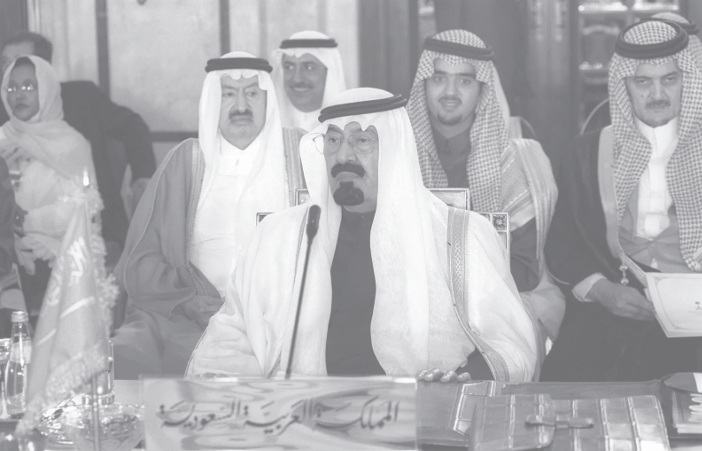
The following proposal is based on and continues the Arab Peace Initiative which was adopted at the Arab League Summit in Beirut in March 2002. The main points of the proposal are: full return to the 1967 borders; construction of a bridge from Gaza to Hebron; a Palestinian seaport in the Gaza Strip and a Palestinian airport in the Jordan Valley; division of Jerusalem; a demilitarized Palestinian state; and the implementation of the right of return within the borders of Palestine.2
A major condition for implementing the proposal is the establishment of an international committee to formulate an economic framework aimed at ending Palestine-Israel mutual dependency. This is an action that can be carried out today, right now, independently of either party.
Explanations, Expansions and Justifications
The demand for resilience is intended to increase the chances of the agreement’s sustainability, since every failure entrenches distrust in its feasibility and thus sets us significantly back. Reducing friction points is what makes the agreement resistant to pressure groups and terrorism, and allows resources to be redirected inward, toward the rehabilitation of society and the economy. Economic autonomy, independence, and an end to the occupation would enable both parties to calm down and focus on resolving internal issues. Just as crucial, the act of reducing points of friction eliminates the need for the preliminary demand for “confidence-building measures.” Existing plans are laden with friction and thus make trust-building between the sides a precondition for progress. However, such a condition becomes an insurmountable obstacle to ending the occupation. We Jews struggle to trust the Palestinians — partly because of what we did to them: we took their home. Research shows that guilt can lead to suspicion toward those who provoke discomfort in us, and makes it harder to take responsibility.3 One can only imagine how Palestinians feel toward those who have deprived them of liberty, life, and dignity for so long.
An economic independence plan would enable compliance with the terms of the agreement. Compensation payments to the Palestinians will be one of the components of such a plan. These compensations, along with Israeli infrastructure left in the occupied territories (construction, roads, etc.) together with the construction of the bridge and ports, will serve as part of Palestine’s economic engines. East Jerusalem, under Palestinian sovereignty, will have an open interface with its surrounding Palestinian areas, thus allowing it to revive and serve as an additional economic and touristic anchor. It should be noted that Palestine’s disadvantage — its relatively small size — is also an advantage: it is much easier to rehabilitate a small state than a large one such as Brazil, for example.
Regrettably, it seems that both Palestinians and Israelis have lost faith in Palestine’s ability to sustain itself independently of the Israeli economy. In 1994/95, during the drafting of the Paris Protocol — the economic annex to the Oslo Accords — the Palestinian representatives expressed a desire for a Palestinian currency and economic autonomy, while Israel insisted on maintaining control over the Palestinian economy through a customs envelope. Since then, more and more Palestinian voices have expressed reservations about economic autonomy, fearing that in its name, Israel might abandon the Palestinians to their fate. The aim of the economic condition — namely, outlining a plan for economic independence as a prerequisite for the agreement’s implementation — is to ensure the rehabilitation and revival of the Palestinian economy, and to restore Palestinian confidence in their ability to exist independently and with dignity.4
Today, compared to Palestine, Israel is not only a military power but also, an economic one. Implementing such an economic plan would serve as a barrier against Israeli exploitation of Palestinian resources, such as labor. The plan would prevent Israeli businessmen from dominating5 the Palestinian economy and block the State of Israel from continuing to control Palestine through economic levers.
As noted above, the State of Israel will have to pay compensation — both to the settlers and to the Palestinians.
A full return to the 1967 borders means the evacuation of all settlements beyond the Green Line—while leaving behind the buildings and infrastructure. The goal is to create a border as short as possible and correct the painful absurdities created by the construction of the separation barrier. The length of the Green Line (371 km) is about half the length of the current barrier (720 km) and about two-thirds the length of the proposed border in the Geneva Initiative (515 km), for example. Palestinian communities that were split by the Green.
Line, such as Beit Safafa and others, will be able to choose which entity they wish to join— or if they prefer to revert to the previous division.
In light of the situation in the Gaza Strip, there is a danger to the residents due to soil and water toxicity caused by the bombings and destruction. It is proposed here to use the buildings and infrastructure of the settlements for the temporary resettlement of at least some of Gaza's residents, until the Strip is rehabilitated and once again fit for human habitation.6
The main challenge, of course, is the evacuation of the settlers.7 It is commonly assumed that they are motivated by an unshakable religious ideological component. Addressing this element must be done from within, grounded in a commitment to living according to the Torah. As a text rooted in interpretation, the Torah has an essential but often overlooked side: a doctrine of boundaries. If there is one sacred principle in Jewish teaching, it is the principle of self-restraint — both on an individual and collective level. The crossing of boundaries for the purpose of settling beyond the Green Line was a product of the religious-Zionist public’s sense of insult and alienation from the broader Israeli society, not a Torah-based demand. We assume that ideology served as a rationalization for this move. Collective traumas and a history of exile have dismantled the Jewish collective consciousness regarding the value of a sustainable border. This can be repaired through a forceps approach: a religious and philosophical discourse from one side, and the establishment of a defined border between Israel and Palestine from the other.8
The construction of a multi-purpose bridge (for cars, trains, bicycles, and pedestrians) is intended to create territorial continuity between the Gaza Strip and the West Bank. Competing proposals often favor a “safe land corridor.” However, a land corridor inherently generates ongoing friction — potentially to the point where Palestine would be forced to observe Jewish holidays, since the passage would inevitably be under Israeli control. Therefore, based on the guiding principle of reducing friction, a bridge is preferable to both a land corridor and a tunnel.9 The bridge would constitute Palestinian territory, while an Israeli territorial continuum would remain underneath. For those concerned that “the Palestinians will be above us,” it is worth noting: 1. Security measures can be implemented as part of the structure — monitoring, sealed edges, etc. 2. A bridge is far more vulnerable than it is threatening.
The construction of a seaport and an airport are essential not only for Palestine’s sovereignty but also as economic drivers.
The division of Jerusalem, designating its eastern part as the capital of Palestine, is essential for reducing friction points, strengthening the national status of Palestine, and serving as an economic anchor. Under Palestinian sovereignty, the city will be able to engage in free commercial and cultural exchange with its natural surroundings and return to life.
Regarding the “religious” argument about the “holy places of Judaism” — this too deserves deconstruction, based on a commitment to living according to the Torah laws, much like the dismantling of settlements. King Solomon himself sent us a message in a bottle: “But will God indeed dwell on the earth? Behold, the heavens, and the heaven of heavens cannot contain You; much less this house that I have built.” (1 Kings 8:27). Solomon emphasizes his role as the builder of the Temple — as someone who has the mandate to hand it over. This verse, embedded in a lofty technical text, was not meant for his own generation, nor for God, but for us: a generation that speaks Hebrew, is capable of abstraction, and caught in an unnecessary dilemma.
Security will be achieved through the demilitarization of Palestine, under international and regional supervision (without Israeli involvement), composed in agreement with both parties. Security will be established by the mere signing of the agreement, the reduction of friction points and the establishment of a controlled and defensible border. The reduction of the risk of violence will occur through the release of the Palestinians from the burden of occupation, through a government that represents them, and through the opening of opportunities for employment, education, culture, etc. In many cases of liberation from bloody struggles against an external oppressor the population that has been freed turns its violence inward, as happened in the Algerian Civil War after the expulsion of the French occupier. Demilitarization will ensure that the suffering Palestinians endured from us, the Israelis, will not be turned inward, and that Palestinian resources will be invested in reconciliation between the various factions.
The Palestinian renunciation of the practical implementation of the right of return is an especially painful component. From the Jewish Israeli interest, and in terms of the fundamental principle of the first stage in the peace agreement, as defined earlier, the actual implementation of the right of return is a ‘deal-breaker’. The question is, who has the authority to make such a concession?
The Arab Peace Initiative, adopted at the Arab League Summit in Beirut in March 2002, as published by the League, calls for: “a just solution to the Palestinian refugee problem to be agreed upon in accordance with UN Resolution 194.10”
Upon the initiative’s adoption, Amr Moussa, then Secretary-General of the Arab League, stated that regarding the refugee issue, the initiative’s wording deliberately leaves the solution to negotiations between Israel and the Palestinians, and not as a matter to be resolved between the League and Israel.11 In an interview with the Egyptian newspaper Al-Ahram, Moussa added that financial compensation “alongside the right of return” could substitute actual repatriation if the relevant Palestinian side agrees.
Marwan Muasher, former Jordanian Foreign Minister and one of the initiative’s architects, emphasized in Haaretz that the initiative calls for an “agreed-upon solution to the refugee problem,” and explained that “this is the first time the Arab world has committed to an agreed solution, acknowledging Israel’s concerns about being overwhelmed by refugees.”
To obtain a Palestinian view, we turned to Samer Sinijlawi, a businessman and political activist from the opposition in Fatah, a Palestinian resident of Jerusalem: “Once Israel exits the territories and allows for a Palestinian state as part of an agreement, Palestinians must view the right of return as a right to return to the State of Palestine, not to the State of Israel, with compensation. Anyone with a refugee certificate from the UN, which includes about 8 million Palestinians, is entitled to financial compensation and the right of return to the State of Palestine. Palestine will need economic assistance to absorb the returnee.”12
In summary, the advantages of an RTS (Radical Two-State Solution) agreement are: relative simplicity, clarity; lowering the expectations of both parties; bypassing the obstacle of confidence-building measures; resilience against pressure groups and terrorism; and the establishment of a wedge against the conversion of military occupation into economic occupation. RTS will allow resources to be directed toward the rehabilitation of society and the state, provide an appropriate response to antisemitism, and help maintain the security of Jews in the Diaspora and the connection with them. The return of the settlers into the Green Line will present an opportunity to integrate them into Israel’s challenges, such as strengthening the periphery and developing learning communities in cities. Currently, the identification of Palestinian citizens of Israel with the residents of the territories generates a relationship of ‘tolerate but suspect’ (at best). A peace agreement based on non-violence will have a calming effect and will facilitate the pursuit of civil equality within the Green Line.
We must develop a pragmatic and research-based approach, with guiding principles of eliminating foreign control and relations of superiority. The two-state solution should be preceded by an economic plan that will guarantee Palestine a dignified existence, free from the humiliating and dangerous symbiosis with Israel. Therefore, it is important for those who support a political arrangement to re-examine their assumptions to avoid f inding themselves paving the way for the next failure, directly into the hands of those who seek to imprison us in the “conflict management” or “military resolution” paradigm, which in practice leads to a never-ending war. Amen, so be it!
Endnotes
1 One such obstacle, frequently raised by the Israeli leftists, is the claim that the public cannot discuss a clear and detailed political agreement outside the framework of direct negotiations with the Palestinians. It is important to remember that we live in a representative democracy. In the current system, political leadership requires clear guidance from the public on which framework to enter negotiations with. Anyone looking at us right now cannot understand what we—Israelis—actually want, and therefore, it is impossible to lead us toward an agreement. The path to reaching an agreement is iterative, meaning it happens in cycles: a civic declaration of a preferred, specific, and explicit agreement; the representatives entering negotiations; returning to the public with the contentious issues; a public decision on those matters; and then back to negotiations—repeating until an agreement is achieved. For example, the criminal act committed by Ehud Barak upon his return from Camp David was to declare that “there is no partner.” Instead, he should have addressed the Israeli public and said: “Listen, we are divided on the issues of Jerusalem, the settlements, and the right of return. Now tell me (via polls), what matters more and what matters less to you in this equation.” Clearly, the public, which was quick to “buy” that irresponsible statement, holds a key role in the collapse that followed. Public discourse expressing a clarified and explicit will is also the way to awaken that will.
2 Additional issues that will need to be jointly discussed as part of the agreement include: the division of water resources, wastewater treatment, climate and environmental policy, permits for Palestinian citizens of Israel to enter Palestine, as well as the phasing of implementation. A guiding principle for resource distribution policy could be, for example, based on the projected population size.
3 The Nakba Shapes Israeli Politics, Haaretz, September 1, 2023 – on the research of Dr. Ammiad Haran Diman, conducted within the Department of Political Science at the Hebrew University of Jerusalem. Haran Diman examined attitudes toward the conflict in localities with similar sociological characteristics. He found a direct correlation between right-leaning political tendencies and the presence of Palestinian remnants in the vicinity of the locality: the more visible and closer the remnants were to the community, the more right-wing the residents’ attitudes tended to be. The results showed that this correlation spans across generations.
4 There is and can be no such thing as absolute economic independence. All nations exist as part of one organic economic fabric. Therefore, the intention is solely economic independence of Palestine and Israel from each other.
5 This is one of the reasons why the peace with Egypt is a ‘cold’ peace. The Egyptians are aware of our economic appetite, and that of the West in general, and they try to protect themselves and their resources.
6 According to CBS data from the end of 2023, 503,732 settlers currently live beyond the Green Line. In addition, there are 236,000 Israeli residents in East Jerusalem. This means that space will be vacated for approximately 750,000 people.
7 Perhaps this is the place to address the issue of political feasibility. Since, in our view, there is currently no feasibility for any type of agreement, political considerations do not play a role—not only in this section, but in the entire proposal. Moreover, civic consideration of the political situation creates a closed loop: when the majority is not interested, others are also not interested, claiming that the majority is not interested—and therefore, there is no feasibility… It is not the role of citizens to engage in political speculation. That is the role of elected officials, not of the voters. Therefore, if change is desired, it must begin with a first-person expression of will: first-person singular, first-person plural. Needless to say, the State of Israel was established—against all odds—through the power of will and at a moment of collective readiness. It must also be recognized that salvation will not come from the politicians. They are dependent on the preferences of the public, and so change will come only from a clarified and explicit public will, that currently does not exist. For example, the Oslo Accords were intended to give the Palestinian Authority the status and tools to fight Hamas. This was not the fault of Rabin and Peres. Politicians are always caught between their responsibility to the state and the public's refusal to part from the conflict.
8 The question remains how Israel will absorb about 750,000 settlers into its territory. There are known cases where the uprooting of settlers caused severe upheaval in the receiving country, such as the absorption of 1,650,000 Christians from Turkey into Greece following the Treaty of Lausanne (1923) – a treaty imposed on both sides. The absorption was traumatic for several reasons: the Turkish occupation lasted over 600 years; the Greek settlers had culturally integrated into Turkey; the population of Greece at the time was about 5 million, meaning an increase of about 33% to the local population. Greece was in economic hardship, mostly agricultural, with a traditional closed-family character. The new settlers were pushed to the city outskirts, unemployed, and considered a social stigma with foreign customs. Meanwhile, in Turkey, the returning settlers, who made up about 5% of the Turkish population, were absorbed without major disturbances. Returning to our case: settlers make up about 8% of the population within the Green Line. At its founding, Israel absorbed much larger numbers of settlers relative to the existing population (for example, in 1949, Israel absorbed 240,000 immigrants—about 24% of the population that year), many of whom lacked language and job skills. In contrast, settlers today generally face no language or employment barriers. Many of them already work within the Green Line (data unavailable).
9 A tunnel has its disadvantages, which will be discussed in a separate, more detailed framework.
10 December 1948: “Refugees wishing to return to their homes and live at peace with their neighbors should be permitted to do so at the earliest practicable date. Compensation should be paid for the property of those choosing not to return, in accordance with international law… The Conciliation Commission should facilitate repatriation, resettlement, and economic and social rehabilitation of the refugees”…
11 Zvi Barel, “Bypassing the Right of Return,” Haaretz, March 29, 2002.
12 A precise and agreed-upon quote from a phone conversation. It can also be assumed that not all of the 8 million would want to return, just as not all Jews worldwide wish to be citizens of Israel.