
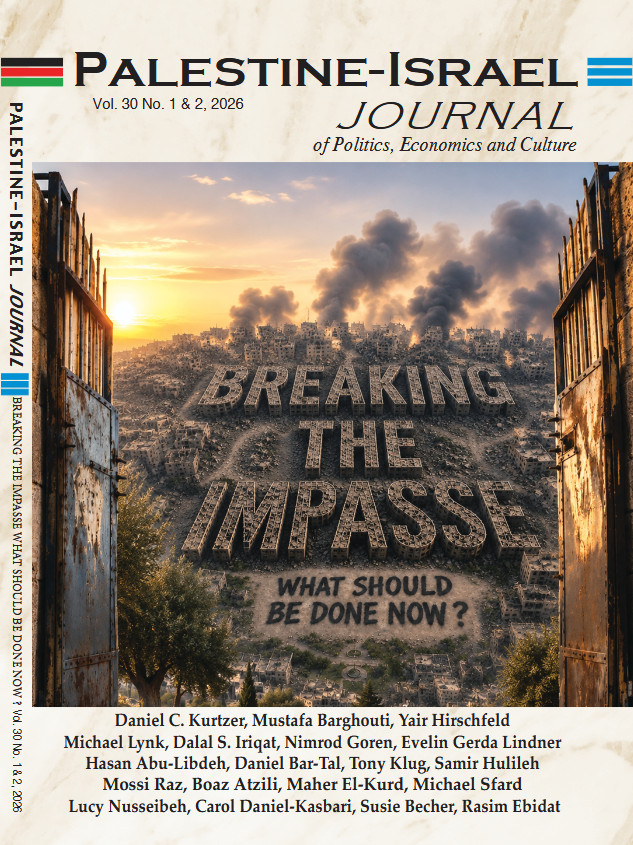
The Israeli Palestinian conflict has reached a dangerous and painful point. After more than seventy-five years of conflict and decades of occupation, both societies are trapped in a deep cycle of fear, anger, and mistrust. The level of dehumanization on both sides has become extremely high.
Many Israelis have come to see Palestinians not as human beings with legitimate rights and aspirations, but as violent enemies, or terrorists who cannot be trusted. On the other side, 95% of the Palestinians in “Palestine” have been born under Israeli occupation, with most of them either having experienced firsthand tragic consequences of continued occupation or witnessed it. For most Palestinians, they mainly encounter Israelis as military power holding control of every aspect of their lives, or settlers determined to take their land or carry out terrorist attacks against them. These negative images have become so strong that they now block almost any serious discussion about peace or coexistence.
At the same time, the West Bank has become increasingly fragmented. There are now more than 1,100 checkpoints, roadblocks, and barriers spread across the territory. These obstacles have broken the West Bank into small, disconnected pieces, where Palestinian towns and villages are cut off from one another, making it difficult to move, work, study, or access basic services. This system has turned what was supposed to be a single, coherent territory into a numerous collection of isolated enclaves.
The current extremist government of Israel has made it much more difficult for everyone. Some members of the Israeli cabinet advocate for exerting extreme pressure through military force, economic restrictions, or settlement expansion, so that Palestinians will eventually give up and leave. This belief is not only unrealistic, but also dangerous and will deepen the conflict, especially since the Palestinians have deep historical roots in this land. They were here long before the creation of the State of Israel in 1948, they are here now, and they will remain here in the future. No amount of military pressure, economic hardship, or settlement expansion will make the Palestinian people disappear.
This long painful bloody conflict and invalidation of statehood aspirations and right to self-determination manifests across political, territorial, and societal levels, fueling ongoing hostility and serving as a major obstacle to achieving a peaceful settlement. The only realistic way to end it is through a political settlement, based on an agreed upon outcome of having two states: a Palestinian state living peacefully alongside Israel, with recognized borders and mutual security.
The Failure of the Current Path
The use of military force has repeatedly failed to bring real security to Israelis or freedom and dignity to Palestinians. Over the past two decades, Israel’s multiple large-scale wars in Gaza and frequent military operations in the West Bank, and tireless efforts from the Palestinians to revenge, have not resolved the core issues of the conflict. Instead, they have deepened hatred, created new generations of people who have only known violence and loss, and made future reconciliation even more difficult.
The current system of control in the West Bank has also become unsustainable. The dense network of checkpoints, roadblocks, and barriers has not secured Israelis from dangers and attacks but made daily life extremely difficult for Palestinians and has also destroyed the possibility of building a viable Palestinian state with functioning economy, proper public services, and decent governance. This physical fragmentation is not just a security measure. It has become a political reality that makes the two-state solution increasingly difficult to achieve on the ground.
The idea that Palestinians will eventually give up and leave is not only unrealistic but also deeply harmful. It prevents serious political thinking and encourages policies that only make the situation worse. Palestinian steadfastness is a permanent reality. The Palestinians have shown, over many decades, that they will not disappear, no matter how difficult the conditions become. Therefore, any serious strategy for the future must start from the fact that the Palestinians are here to stay, and that the only way to end the
conflict is through a political agreement that recognizes their national rights.

The Toxic Image Banks We Hold of Each Other
One of the biggest obstacles to peace is the way each side sees the other. These perceptions, often called “image banks,” are filled with fear, anger, and dehumanization. Many Israelis have come to view Palestinians as violent people who hate Jews and want to destroy Israel. Many Palestinians have lived the violence of occupiers and greed of settlers who want to take their land and deny them their basic rights forever. These images are not based on careful or balanced thinking. They have been shaped by years of
bloodshed, wars, occupation, and suffering.
When people see each other only through these negative images, it becomes very difficult to imagine living together in peace. These images justify harsh policies and make any form of compromise feel like weakness or betrayal. They also make it easier for extremists on both sides to gain support, because they feed on fear and anger.
These image banks are not fixed or permanent. They were created over time through experience, education, media, and political messages. So, because they were created, they can also be changed over time.
When Israelis and Palestinians meet face to face as human beings, these rigid and hateful images can begin to break down. Personal contact, shared stories, and joint work can slowly replace fear with understanding. This process is not easy, and it does not happen quickly, but it is possible, and there are already real examples showing that it can work.
Evidence That Change Is Possible
There are already significant initiatives that prove negative perceptions can change when people from both sides engage with each other directly. The “Parents Circle Families Forum” brings together Israeli and Palestinian families who have lost loved ones in the conflict. Instead of choosing revenge, these families choose to meet, talk, and share their pain. Their work shows that even the deepest grief does not have to lead to endless hatred. Many members of this group now work in schools and communities to promote understanding and non-violence.
“Combatants for Peace” brings together former Israeli soldiers and former Palestinian freedom fighters who once fought against each other. Today, they work together to promote non-violent solutions and educate young people from both sides. Their personal stories are powerful because they come from people who were once active in the conflict. “EcoPeace Middle East” brings Israelis, Palestinians, and Jordanians together to work on shared environmental problems, especially water and energy. These
practical projects create cooperation based on mutual needs rather than only emotions or political agreements.
Other initiatives, such as the Arab-Hebrew Theater of Jaffa and bilingual schools like Hand in Hand, also show that joint work and shared spaces can help reduce fear and build understanding. These initiatives are still small compared to the size of the conflict. However, they prove an important point: when people from both sides are given the chance to meet and work together, negative perceptions can slowly change. If these kinds of efforts are expanded and supported by both societies and by international actors, they can help create foundations needed for any political agreement.
Is the Two-State Solution Still Possible?
Over the years, serious efforts have been made to reach a two-state solution. In 1995, Mahmoud Abbas and Yossi Beilin developed a detailed draft agreement on final status issues. In 2003, the Geneva Initiative produced a comprehensive model for peace that addressed borders, Jerusalem, security, and refugees. In 2007 and 2008, Tzipi Livni and Ahmed Qurei held several negotiations, though these negotiations yielded little progress.
However, the continued expansion of Israeli settlements in the West Bank has created a major and dangerous obstacle. More than 750,000 settlers now live in the West Bank, including East Jerusalem. Many of these settlements are in areas that would be essential for a viable and contiguous Palestinian state. The actions of extremist settlers, who often act with impunity, have made the situation even worse. Their violence against Palestinian communities and their efforts to take more land, are not only harming Palestinians daily, but they are also destroying the possibility of a two-state solution and making it harder to accept Israel as a potential normal and legitimate country in the region.
Some people now argue that because of these realities, the two-state solution is no longer possible, and that the only remaining option is one democratic state for both peoples. While this idea may sound fair in theory, it faces serious practical obstacles. Most Israelis fear that one state would end Israel as a Jewish state. Most Palestinians doubt it would deliver genuine equality or self-determination. In reality, if the two-state solution is deliberately destroyed through continued settlement expansion and the rejection of Palestinian statehood, the result will not be a peaceful one-state democracy. It will likely lead to a reality of permanent inequality and an apartheid state, or to endless internal conflict. Neither of these outcomes serve the long-term interests of both people.
A Roadmap for Hope: What Must Be Done Now
Hope by itself is not enough. What is needed now is a clear and practical Roadmap for Hope — a step-by-step plan that can gradually rebuild trust and lead toward a permanent political agreement. This roadmap should work on several tracks at the same time, because no single measure will be enough to change the current situation.
Immediate Steps to Reduce Violence: The first and most urgent track is to stop the violence and create political space. This requires a lasting ceasefire in Gaza, followed by a clear plan for total Israeli withdrawal. At the same time, Israel must end the fragmentation of West Bank, remove all economic restrictions and measures, freeze all new settlement construction, and take decisive action against settler violence in the West Bank.
On the other hand, the Palestinian side must regain control over law and order in West Bank and assume responsibility for cracking down on those trying to take law in their hands and not conducting themselves in accordance with the official position of peaceful resistance to occupation.
These steps are not only necessary for humanitarian reasons. They are also essential to create the minimum conditions for any political process to begin.
Rebuilding Trust Between the Two Peoples: The second track must focus on rebuilding trust between Israelis and Palestinians. This can be done by expanding people-to-people programs, supporting joint educational initiatives, and encouraging Track II dialogues between influential people from both sides, including academics, former officials, security experts, and civil society leaders. These forums can help develop new ideas and gradually change negative perceptions. While these efforts will not bring peace on their own, they can create the human foundation needed for any future agreement. Without some level of trust, even the best political agreements will be difficult to implement.
Internal Responsibilities on Both Sides: The third track must address internal responsibilities. On the Israeli side, there must be a serious confrontation with the threat posed by extremist settlers and continued settlement expansion. These actions are not only
destroying Palestinian lives and land. They are also damaging Israel’s international standing and eliminating any realistic chance for regional acceptance and integration. As long as Israel is seen as the main source of instability through its settlement policies, many countries in the region will remain unwilling to fully normalize relations with it. A strategic shift in Israeli public opinion is needed, based on a clear understanding of the long-term costs of continuing the current path.
On the Palestinian side, there must be a serious commitment to abide by rule of law, building a democratic state with strong institutions, an independent judicial system, combating corruption, and developing a productive economy. A Palestinian state that is well governed and economically viable will be much more likely to gain recognition and live in peace with its neighbors. Without serious internal reform, it will be difficult for Palestinians to build a state that can deliver for its people and maintain peace.
A Serious Political Process: The fourth track must focus on a serious political process. A structured and time-bound negotiation process is needed, with clear goals and strong international support. The aim of this process should be to end the occupation and establish a viable Palestinian state on the 4th, of June 1967 borders, living peacefully next to Israel. This process should also be connected to broader regional normalization, in line with the Arab Peace Initiative of 2002, so that Arab states can play a constructive role in supporting peace. Of course, this requires a serious shift on the directions taken by the Israeli government.
A credible political process must also be connected to regional developments. The Arab Peace Initiative of 2002 remains a historic and constructive offer by Arab states to normalize relations with Israel in exchange for a just resolution of the Palestinian issue based on the two-state solution. Israel should take a positive and serious stand toward this initiative rather than ignoring or rejecting it. Linking regional normalization, particularly with Saudi Arabia, to meaningful progress on the Palestinian track can provide Israel with strong incentives to return to negotiations. Without such linkage, normalization risks becoming disconnected from the core issue of the conflict and may further weaken the prospects of a two-state solution.
Building Economic and Regional Foundations: The fifth track should focus on building economic and regional foundations for peace. Joint economic projects, cooperation on water and energy, and regional integration can create mutual interests. When both people see that peace can bring real benefits in terms of jobs, development, and stability, it becomes easier to support difficult political decisions. Economic cooperation can also help reduce the sense of despair that currently exists on the Palestinian side. This cooperation must be adopted upon an explicit commitment of Israel to accept the birth of the long-awaited Palestine State.
The Choice Before Us
The path that both sides are on today leads only to more blood, more hatred, more violence, and the formal creation of an apartheid State of Israel. The alternative is difficult, but it is still possible. It requires courage from leaders and from ordinary people on both sides. It requires Israelis to accept that Palestinian statehood is not a threat to Israel’s existence, but a necessary condition for its long-term security and acceptance in the region. It requires Palestinians to accept historical compromises in order to build a state that is democratic, accountable, and capable of living in peace with its neighbors.
There is no perfect or easy solution to this long and painful conflict. There are only two choices. One choice leads to more blood, more hatred, and the gradual destruction of any chance for a dignified future. The other choice leads toward two states, mutual recognition, and the possibility of regional cooperation and prosperity. The decision is still in the hands of both societies and their leaders. If they choose wisely, a better and more peaceful future is still within reach. If they do not, both people will continue to pay a terrible price for many years to come, especially The Palestinians.